Science in GIFs: How a key opens a lock
Showing posts with label sciencegifs. Show all posts
Thursday, December 13, 2018
Tuesday, December 11, 2018
Science in GIFs: 4-stroke Internal Combustion Engine
Monday, December 10, 2018
Science in GIFs: Kinetic vs. Potential energy
Friday, December 07, 2018
Science in GIFs: Mechanical binary counter
Friday, November 30, 2018
Science in GIFs: Butterflies of North America
Friday, November 16, 2018
Science in GIFs: Annual cycle of migration of different bird species across the Americas
Thursday, November 15, 2018
Science in GIFs: Wave interference
Wednesday, November 14, 2018
Science in GIFs: Escape velocity for every planet in the Solar System
Wednesday, November 07, 2018
Science in GIFs: Pendulum clock mechanism
Monday, November 05, 2018
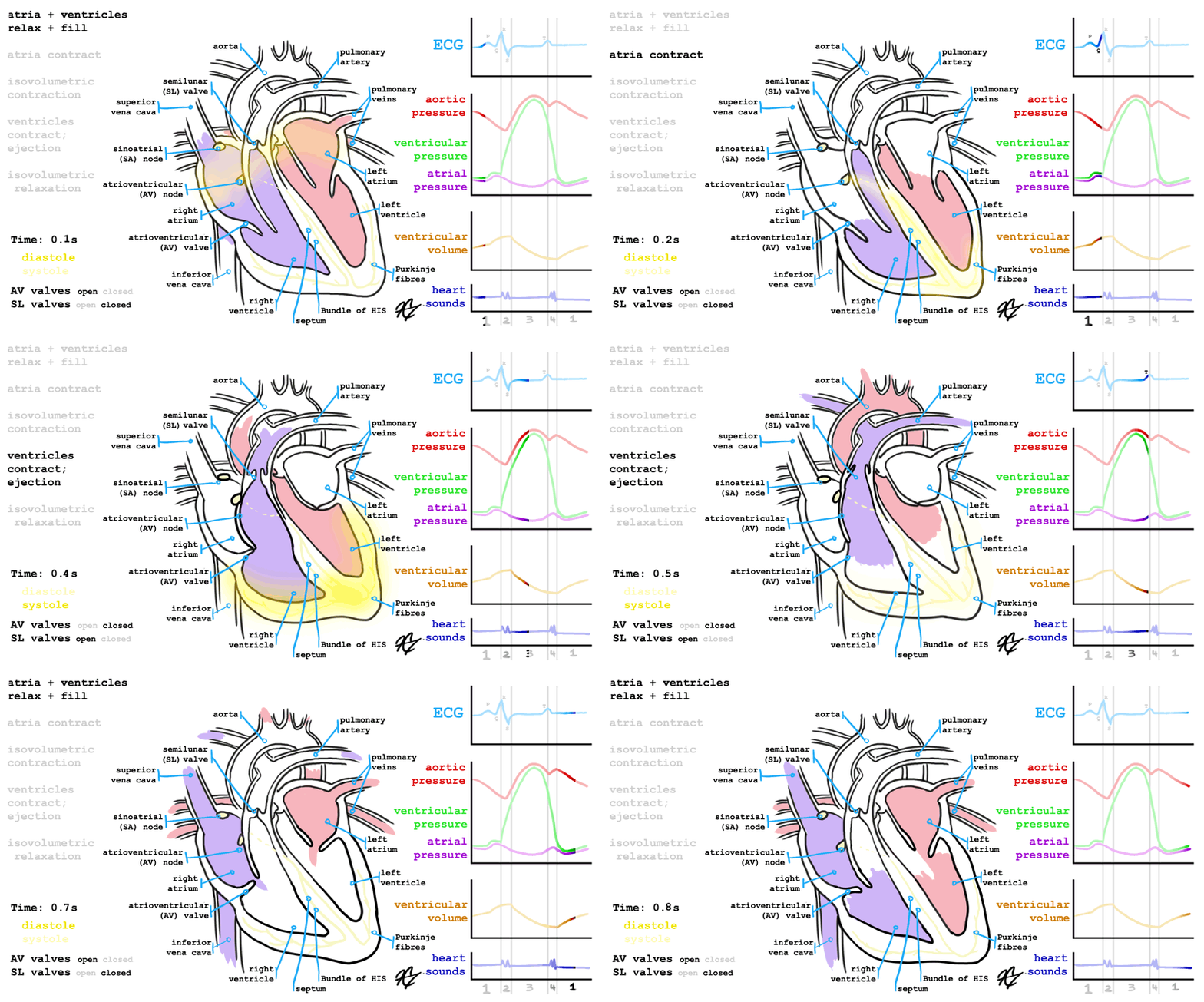
Science in GIFs: Cardiac cycle and ECG
Sunday, November 04, 2018
Science in GIFs: Mercator projection vs. Reality
Wednesday, March 08, 2017
Science in GIFs | Spill test to systematically and visually discern primes
Tuesday, November 11, 2014
Science in GIFs: A Mesocyclone Supercell at West Point Nebraska
Why is this not a tornado?
Technically, a “tornado” is a rotating vortex cloud that touches the ground. Needs a funnel first. We’re looking at a “mesocyclone” which is the rapidly rotating core of a supercell from which tornadoes can form. Now, a tornado could form from this storm at any time, so it would have a tornado warning attached to it. These kinds of rotation are what is seen on radar.
Thursday, November 06, 2014
Science in GIFs: Refraction of light through a glass of water
There’s more than refraction to the Reverse arrow illusion, however.
Just because light bends when it travels through different materials, doesn’t explain why the arrow reverses itself. To explain this, you must think about the glass of water as if it is a magnifying glass. When light goes through a magnifying glass the light bends toward the center. Where the light all comes together is called the focal point, but beyond the focal point the image appears to reverse because the light rays that were bent pass each other and the light that was on the right side is now on the left and the left on the right, which makes the arrow appear to be reversed. Via
Saturday, November 01, 2014
Science in GIFs: Mushroom Cloud
And here’s why an atom bomb explosion forms a mushroom cloud:
You don’t need an atom bomb to make a mushroom cloud, just convection. Mushroom clouds typically occur when an explosion produces a massive fireball. Since the fireball is very hot and thus less dense than the surrounding air, it rises rapidly, forming the cap of the mushroom cloud. In its wake the fireball leaves a column of heated air. This acts as a chimney, drawing in smoke and hot gases from ground fires. These form the stalk of the mushroom. Since the center is the hottest part of the mushroom cloud, it rises faster than the outer edges, giving the impression that the cap is curling down around the stalk. Thus the familiar fungal form.
About the author:
Iqbal Mohammed is Head of Innovation & Strategy at a digital innovation agency serving the DACH and wider European markets. He is the winner of the WPP Atticus Award for Best Original Published Writing in Marketing & Communication.You can reach him via email.